




Intensely practiced by fishermen in Menabe, the exploitation of sea cucumbers is highly profitable: the kilogram can be sold for up to €90 on the international market. However, the overexploitation of these creatures has led to a surge in illegal fishing, with the bans on their harvest failing to address the insecurity of the working conditions faced by the fishermen.
Sea cucumber fishing is a favored activity for Menabe’s fishermen. Collectors, exporters, and sea cucumber fishers have multiplied over the years. Yet, it remains a dangerous job, often carried out without proper equipment, resulting in negative health and environmental consequences. Additionally, local municipalities are not receiving their fair share of royalties.
Sea cucumbers, also known as holothurians, bêche-de-mer, or zanga in Malagasy, are soft-bodied echinoderms with an elongated shape. They are primarily sold on Asian markets, where they are highly valued. Intensive fishing has drastically reduced the populations of sea cucumbers. Currently, the Holothuria scabra species, endemic to Madagascar’s coasts, is listed as endangered by the International Union for Conservation of Nature (IUCN). On the Malagasy coastline, particularly in Menabe, various species of sea cucumbers can be found. Local fishermen refer to them as dingandingambato, tricot, benono, goaka be, mavo, asta, or borosy, often referring to them as “slippers.”
Sea cucumber fishing takes place at considerable depths. Divers report descending as deep as 20 meters below the sea to collect them. “A group of about 20 men can bring back between 200 to 300 kilograms of product in one dive, if the weather is good and the necessary tools, such as spears, are available,” explains Rico, a sea cucumber fisherman from Anosikely, in the urban commune of Toliara. Rico and his fishing partners use a motorized boat, locally known as a tefotefo. They are fully supported by a collector-based entrepreneur located in Mahajanga, who exclusively purchases the products collected by Rico. “Our boss, who lives in Mahajanga, provides us with working materials, motors, and boats. As for the price, we settle by piece. For example, for a cucumber called ‘Mavo,’ our boss buys it from us for between 50,000 to 60,000 Ariary per unit, depending on its size. That’s the price for the first quality.”
On the international market, the price for a kilogram of dried sea cucumber averages €90. Japanese sea cucumbers are known to be the finest, with the price for the processed product reaching approximately €3,000 per kilogram.
A Shortcut to Avoid the Authorities
By collaborating with a collector based in Mahajanga, Rico’s team is accustomed to a somewhat clandestine system. The harvested sea cucumbers are immediately loaded onto boats in open sea and are directly transferred to collectors in Mahajanga or Morombe. This shortcut bypasses the accounting of the products by the commune of Morondava, which therefore does not receive its share of royalties. The boat heads straight to Mahajanga, where the collector retrieves the products. As a result, the commune does not receive its due on marine products harvested in its zone. It is then impossible for local authorities to have a clear estimate of the products from the activities carried out by small-scale fishermen like Rico and his team. Other collectors wait for the early hours of the day, upon the return of the fishermen from Anosikely, to directly weigh the harvested sea cucumbers, purchase them, and transport them by car. No authority is present. There is no record of the transaction: goods are exchanged for payment.
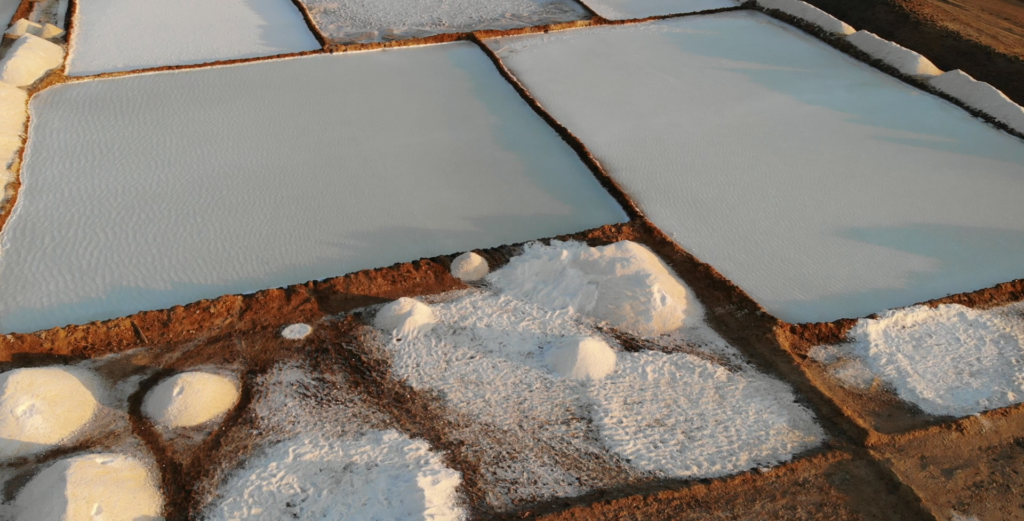
In Andranopasy, a coastal village located at the edge of the Mozambique Channel, after a long journey through the Kirindy Mitea protected area, sea cucumber fishing is also a favored activity among fishermen. However, it is primarily fishermen from other localities such as Toliara, Morombe, Anantsono, Salary, Ambatomilo, or Andavadoake who come to fish for zanga. Local fishermen are used to diving at great depths. From sea cucumber fishing, they mostly benefit from the salt production, which is essential for the preservation of the zanga, and the fact that both fishermen and collectors spend part of their earnings in the local market.
Théophile, president of the Sira Andranopasy Mihetsika association, explains: “Most of the fishermen, collectors, and customers who take the sea cucumbers are not from here. As a result, we see that there are fish traders who would never sell to anyone other than the collectors from their own villages. For the residents of Andranopasy, the profits come from the sale of salt to fish traders and collectors, the sale of rice, and the fact that half of the money from the sea cucumbers is spent in Andranopasy, as well as royalties paid to the commune, provided that this rule is properly enforced.”
Collection and Sale Without Formalities
According to the mayor of the rural commune of Andranopasy, Albert Laurent, the activity of collecting sea cucumbers was significant before the lockdown caused by the global COVID-19 pandemic: “Before the lockdown, sea cucumbers had real value on the local market. In one year, we would collect up to 10 million Ariary in royalties, for example. With the lockdown, prices collapsed. Right now, it feels like we’re starting the sector over again. We don’t yet have a final calculation of the royalties from sea cucumbers in 2021, but for one piece, the commune collects 2,000 Ariary in royalties.”
Although the rural commune of Andranopasy collects 2,000 Ariary per sea cucumber, the monitoring system leaves much to be desired. During our visit to Andranopasy, no local authority representative was present to oversee the count of the products brought in by the fishermen, some of whom do not have professional cards or registered pirogues. As a result, a collector was able to buy four large bottles filled with sea cucumbers, hand-to-hand, with no formalities other than paying the fishermen for the products. “These are collectors with whom we have regular contact and with whom we have worked for a long time. There is trust between us,” explains the mayor, visibly. However, the commune does not have any up-to-date statistics on the marine products leaving the district.
In Belo sur Mer, another sea cucumber fishing site, the issue lies with the royalties themselves. The administration of this coastal urban commune in Menabe believes the royalties being applied are below the market value of the product, as explained by Fanambinana Rojer, deputy mayor: “Sea cucumber should actually be an important source of income for the commune if we could correctly collect our royalties. We charge 500 Ariary per piece, while the product is sold for between 50,000 to 100,000 Ariary on the market.”
Collection and Sale Without Formalities
According to the mayor of the rural commune of Andranopasy, Albert Laurent, the activity of collecting sea cucumbers was significant before the lockdown related to the global COVID-19 pandemic: “Before the lockdown, sea cucumbers really had value on the local market. In one year, we would collect up to 10 million Ariary in royalties, for example. With the lockdown, prices collapsed. Currently, it feels like we’re starting the sector over again. We don’t yet have a final calculation of the royalties from sea cucumbers in 2021, but for one piece, the commune collects 2,000 Ariary in royalties.”
While the rural commune of Andranopasy collects 2,000 Ariary per sea cucumber, the monitoring system leaves much to be desired. During our visit to Andranopasy, no local authority representative was present to oversee the count of the products brought in by the fishermen, some of whom do not have professional cards or registered pirogues. As a result, a collector was able to purchase four large bottles filled with sea cucumbers, hand-to-hand, without any formalities other than paying the fishermen for the products. “These are collectors with whom we have regular contact and with whom we have worked for a long time. There is trust between us,” explains the mayor, visibly. However, the commune does not have any up-to-date statistics on the marine products leaving the district.
In Belo sur Mer, another sea cucumber fishing site, the issue lies with the royalties themselves. The administration of this coastal urban commune in Menabe believes that the royalties being applied are below the market value of the product, as explained by Fanambinana Rojer, deputy mayor: “Sea cucumber should actually be an important source of income for the commune if we could correctly collect our royalties. We charge 500 Ariary per piece, while the product is sold for between 50,000 to 100,000 Ariary on the market.”
Collectors in Difficulty
Collectors also face difficulties. For them, the top priority is obtaining a collection permit. A collector from Andranopasy shares: “Before, it was affordable. We paid 5 million Ariary to obtain a collection permit. But today, we pay 10 million Ariary in Antananarivo. Only after payment do we get a collection permit. In any case, that’s the fee if you want to export your products. But if you sell them at the Toliara market, for example, fish traders can already take care of them. They also have their permits issued by the Fisheries Department, costing 100,000 Ariary.”
Collectors cast a wide net to fill their coffers. This collector, met in Andranopasy, obtained a collection permit for Toliara and Morombe, and collects products up to Andranopasy and Morondava.
Overexploitation, Illegal Practices, Corruption
As the consumption and price of sea cucumbers increase on the international stage, the pressure on the sea and these species also intensifies. So much so that in 2016, the Ministry of Fisheries decided (Decree No. 10772-16 of May 13, 2016, suspending all activities related to the exploitation of sea cucumbers) to suspend sea cucumber exploitation, with the exception of regulated farms like those in Toliara.
Despite this, sea cucumber fishing continues. Due to the growing scale of this exploitation, illegal practices are threatening these marine species. For example, in 2015 in Sainte-Marie, cases of corruption involving the purchase of fuel, salt, and diving equipment proliferated due to the rise in unregulated divers. They add equipment to organize the plundering of sea cucumbers.
In the case of Andranopasy, which is part of a protected marine area, certain zones are theoretically off-limits to fishermen and are solely reserved for wildlife and plant life, as habitats and feeding grounds. According to the Madagascar National Parks (MNP) branch in Morondava, the responsible officials explain that marking equipment is already available for the protection of sensitive areas. However, they cannot yet be used because “their handling requires a certain level of technical expertise.” Sea patrols are regularly organized, but they are also insufficient. Moreover, beyond the protected area, unregulated fishermen enforce their own rules on the high seas.