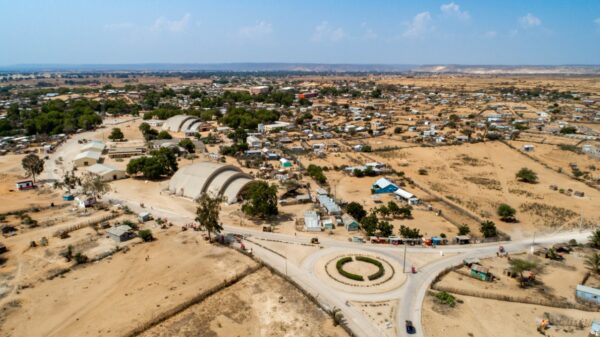





Covered by the deafening silence of victims and their families, sexual corruption is rampant. In Toliara, in the Atsimo Andrefana region, a few testimonies escape the omerta. But resistance, even denial, is just as worrying.
Give in or give up school
“Mister fiddles with my breasts”. Miora, 14, talks about her high school teacher in Toliara. ”I was having trouble keeping up in class. Monsieur talked about improving my grades, In return, I had to go out with him.” Miora refused his teacher’s dubious advances, but the damage was done: “I didn’t dare tell anyone about it, not my elders, not my parents. And I decided not to go back to school.
Sandra, another 15-year-old from Toliara, is just as bitter. ”My mother couldn’t pay my school fees. I couldn’t take my exams if the fees weren’t paid. Destitute, the teenager decided to raise her case openly with the school principal, in the hope of finding a solution.” I spoke to my principal. He told me he could grant my request on one condition. He wanted me to go out with him, so my schooling problems would be solved. My mother wouldn’t know anything about it, he said.” Sandra refuses the proposal of sexual corruption. ”The principal closed his office door. He said he wouldn’t let me go. I told him I wouldn’t accept. Then he threatened to fire me. I preferred to be fired. I chose to drop out of high school.
The testimonies of these two teenagers are revealing of the devastating effect of attempted or actual sexual corruption. Some malicious teachers abuse the authority they wield over their most vulnerable pupils: children from precarious families, pupils with academic difficulties, naive young people… Most victims do not press charges, giving the instigators the opportunity to re-offend and escape punishment. And the practice continues, from secondary school to university.
Manipulation, intimidation
In Toliara, we meet Madame M, whose student daughter, to whom we’ll give the assumed name of Vao, has been the victim of a predator: her supervising teacher. The events took place in 2018. “My daughter was preparing for her Master’s degree at Maninday University,” begins Madame M. “Since 2017, she had been concentrating on her studies, with a view to earning this degree. But Vao and the professor in charge of supervising her dissertation work couldn’t get along. My daughter assumed that her supervisor wanted money, because he asked to meet her on neutral ground”. The student went to the meeting and disappeared for a day and a night, her phone switched off. When she finally called her distraught mother back, Vao asked to be picked up in… Mangily. The “neutral ground” was a tourist beach a few kilometers from Toliara. Vao didn’t find the strength to speak until the following day. To her mother, she confided that “she had been abused by her supervisor. I asked him if he’d been able to finish the job. Yes,” she assured me.
According to Vao’s mother, this framer “invited her to an aperitif. It was the last thing my daughter remembered. He threatened that if she denounced him, he would deny everything and declare that she was of age and consenting. My daughter chose to stop her studies after this trauma”.
Mrs M and her daughter did not press charges. The police were therefore unaware of the incident, and the alleged perpetrator was not obliged to explain himself before the courts. In the meantime, the teacher in charge died: he remains innocent forever, and his victim traumatized for life.
“It’s all an act!”
The opinion of Dr. Razafiharison Andriamanantena, President of the University of Toliara, is clear-cut. Having viewed Madame M’s testimony during the public presentation of the results of the survey on the situation of sexual corruption in Toliara on November 15, the N°1 of the University of Toliara confidently concludes: “For me, it’s a comedy. I think it’s the student who seduced her supervisor and, afterwards, claims to be the victim. It’s all an act!
Other comments follow : “I’ve got nothing against a teacher dating a student. People who are in the same circle end up getting closer, which is why professors and students get together. I don’t have a problem with that, as long as the relationship doesn’t affect the student’s grades. By the way, in our country, a man can have two, three or even ten wives. People from the Highlands don’t necessarily understand our culture, and talk about sexual corruption or sexual favors”.
The speech was even quite categorical, evoking “the prostitution of female students”. The tone is clear: “I don’t think professors seduce students. On the contrary, it’s the students who seduce the teachers. And for me, that’s prostitution. It’s this prostitution of young girls who prey on teachers that’s problematic, in my opinion”.
At the public presentation, the university representatives fiercely defended the reputation of their institution and its faculty. But back on campus, they heard a different story.
Beautiful students in distress
At the University of Maninday, Toliara, some students agree to meet us. Despite the need to express themselves, there is also a clear concern that their revelations could backfire. We are keeping them anonymous for their own safety.
Brenda, a student at Maninday, explains the scenario : “You take a test, you pass. So far, so good. “But as soon as you fail a single module, some of the teachers observe and spot the beautiful girls who have failed”. In other words, the list of failed students would be sifted through, and those “unlucky” enough to be pretty would fall prey to the corrupters. “If they fail to win the student’s favor in return for better grades, they’ll make up for it at the dissertation defense. And the student will fail. This is common in the DEGS faculty, in Management, in Malagasy and in Law.”
The university’s presidency is up in arms. Dr Razafiharison Andriamanantena is indignant : “They say there’s sexual corruption, but nobody dares to denounce it publicly. In the case of the Malagasy department, for example, we had over 600 candidates for the exams, and only about fifteen were admitted. If there was sexual corruption in this department, why did so few students pass ?
But if there wasn’t, why are these students complaining about it ? For Francia, another Maninday student, “Victims don’t dare speak out, because at university, to oppose a professor is to risk expulsion or repeating a year”.
Sugar daddy, super power !
These touches and sexual corruptions are said to be a bargaining chip. Sexual favors in return for passing exams, high marks, access to exam papers ahead of time, to name but a few examples cited by these students. But the rampant precariousness seems to win every argument. On campus, students openly discuss the phenomenon: “Life is hard! And the professors offer us pocket money (…) So the students start to adapt. The teacher becomes a sugar daddy. It’s not about love, it’s about money, good grades, getting into exams”.
The power of the sugar daddies is said to be spectacular: they can get students with below-average grades admitted or fail others, despite their excellent grades. Other Maninday students we met during an awareness campaign against sexual corruption in Toliara in November 2022, mention another fact: “If the student resists, she’ll be in trouble. If she has a boyfriend, he’ll be in trouble too. Who do you want us to complain to ? All we have to do is say it out in the open, and everything will turn against us.
None of the students we met in Maninday seemed to accept, or even mention, any explanation other than the intervention of a corrupter. For them, the fact is clear : sexual bribery has become one of the quickest ways to achieve academic success.
Silence, hifikifika and other arrangements
In the case of Atsimo Andrefana, the regional directorate of Education declares that it has not been informed of any cases of sexual corruption. When questioned, the regional director, Etsimifalo, reveals that he “has not received any complaints from the management of the region’s collèges d’enseignement général, nor from parents of pupils”, since taking up his post in 2019.
The same is true of the University of Maninday, Toliara. During his four years as president of the university, Dr. Razafiharison Andriamanantena claims “to have received no complaints relating to cases of sexual corruption, whether from students, teachers or parents”. Dr. Razafiharison continues : “As a scientist, I find it difficult to believe rumours. The truth will emerge from investigations. But as president of the university, I will never condone any professor who is the perpetrator of this practice.
Rakotovao Hasinasolo Lanjanavalona, a juvenile court judge with a long career in the world of justice, has observed certain cases in the Atsimo Andrefana region and says she is “convinced that cases (of sexual corruption, editor’s note) do exist (…) They are numerous, but the complaints don’t reach the courts”.
The reasons are manifold. “It is possible that students may have made proposals with the intention of succeeding in their exams (Editor’s note). Later, when they realize the situation and wish to file a complaint, the other party will declare their innocence, claiming they did not initiate the action. As a result, the students retract their statements.”
Traditions exacerbate the situation. Judge Rakotovao explains : “The ‘hifikifika’ involves shedding an animal’s blood to cleanse both parties of the wrongdoings committed. This practice is frequently used by the victims’ families and the perpetrators to escape justice.” It is, therefore, an informal settlement that leads to the withdrawal or absence of complaints to the police, the gendarmerie, or the court.
However, this silence tends to trivialize sexual corruption practices, even normalizing them. Judge Rakotovao reminds us : “Filing a complaint is the only recourse to put an end to these abuses, so that our children, or any other children, are no longer the victims of predators.”
PICEES, Zero Tolerance Towards Sexual Corruption
The Pact for Bodily Integrity in Education and Higher Education (PICEES) was developed to strengthen the strategy against sexual corruption in the educational sector in Madagascar. This pact reflects the signatories’ commitment to adopting a stance of complete intolerance towards sexual corruption practices and to demonstrating a clear commitment to ensuring young people’s right to a healthy, free, and safe education.