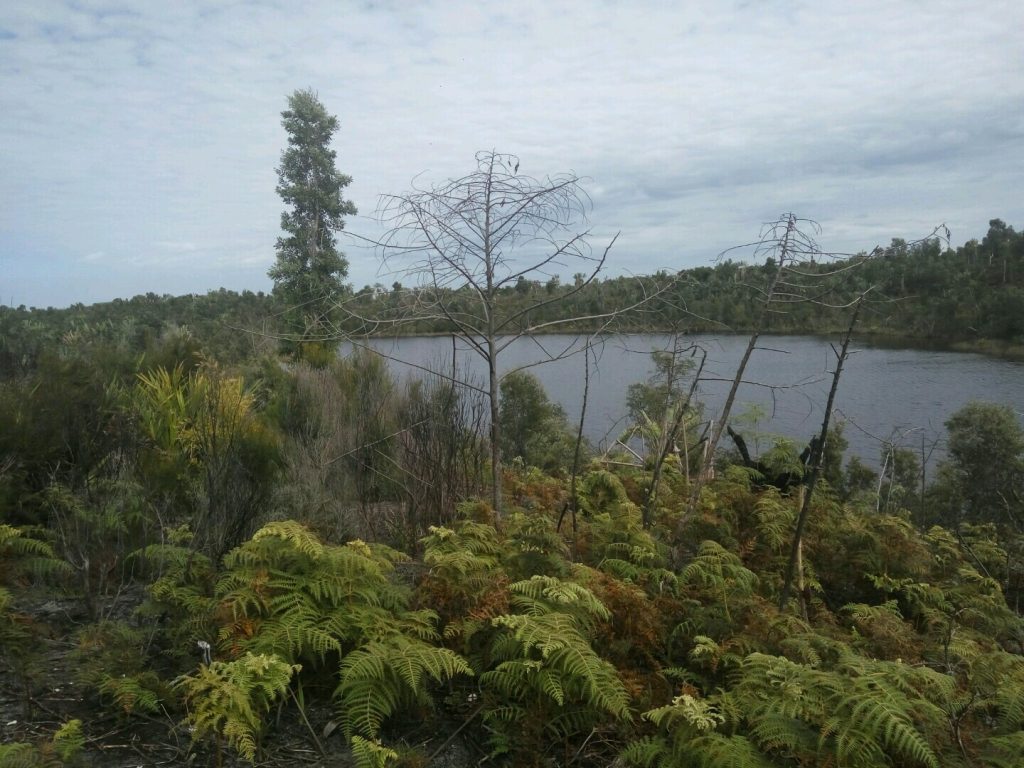





A cry for help echoes from the Vohibola Forest, located in the Brickaville district of Atsinanana. This forest is a victim of looting, poaching, and illegal logging, despite numerous attempts by the local association, Razan’ny Vohibola, to alert the authorities. The situation is worsening: locals speak of physical threats, intimidation, and corruption. In nearly 15 years, the forest has lost more than half of its area : only 1,000 hectares remain today, down from over 2,000 hectares in the past. The wrongdoers are rubbing their hands together, while Vohibola slowly dies. At least three instances of suspected corruption were reported during the investigation conducted by the journalists, involving traffickers, local officials, and individuals within the court system.
A whole population lives in an atmosphere of fear due to traffickers and illegal exploiters.
In the rural commune of Ambinaninony, Brickaville district, directly connected to the Vohibola Forest, the villagers are terrorized: the traffickers are armed and do not hesitate to attack the locals and the patrol officers. They seem to enjoy protection from higher authorities. “I don’t earn anything for this work protecting the Vohibola Forest, but I’ve made dangerous enemies,” swears Talata Joelina, former president of the Razan’ny Vohibola association. When asked, “What does the fokonolona (community) do in the face of the plunderers ?” the answer from a villager in Topiana is telling of the overall climate : “The fokonolona should act and protect the forest, but the association members are afraid for their lives, they fear being attacked with knives deep in the forest.” Thus, the Vohibola Forest has become a battleground between unarmed protectors and armed plunderers.
About sixty kilometers from Toamasina, Vohibola is the last primary forest on the eastern slope of Madagascar. It is surrounded by the villages of Andranokoditra, Tampina, Topiana, and Ambodirotra, and separated from the Indian Ocean by a mere 300 meters of beach. This forest is a prime target for wood traffickers, despite its status as a protected area granted in 2016.
In five years, Vohibola has sparked much ink in the press.
Told by the local villagers’ association, Razan’ny Vohibola, the stories reveal the abuses and illegal exploitations in the forest area. “There are at least eight to ten charcoal fires in one area, and I’m only talking about one part of the forest,” fumes Angélique Décampe, the current president of the association, alongside her husband, Stéphane Décampe. During our visit to Vohibola in September 2022, ashes and debris from freshly charred charcoal, as well as bundles of cut and tied wood, were found on the banks of the Alaotra River, at the extreme northwest of the forest. “These practices are not new,” explains a local resident who requested anonymity. “We’ve noticed them for years, but they have worsened over the past decade.”
Human resources are desperately lacking. Only two patrollers, paid by the Razan’ny Vohibola association, are in charge of the 2,700 hectares of forest. Rakoto and Stan begin their rounds at 7 a.m. to explore the site on foot. In case of a crime, there are no means to alert the police, and they would have to retrace their steps back to their village. Due to the lack of equipment and human resources for the patrols, the armed plunderers manage to escape. “We hear them from time to time, especially at night. They light fires to make charcoal,” the patrol officers say. The two guards regret the departure of their colleagues, most of whom decided to quit under pressure. “We were twelve. But they all left, some returned to the countryside to become rice farmers…” Brave yet without much support, the patrol officers fight alone.
Wood Trafficking : From Vohibola to Toamasina
“A GROUP OF PEOPLE FROM TOAMASINA ORGANIZES AND CARRIES OUT ILLEGAL LOGGING IN THE VOHIBOLA FOREST,” CLAIM THE PATROLLERS.
Rakoto and Stan are adamant: “They are a dozen men who enter deep into the forest, armed with sharp objects and tools. We can do nothing against them.” These illegal loggers generally target specific tree species: nanto, tezatrasina, tezamaty, and andrivola woods. These woods are known for their strength and resistance to moisture, making them ideal for construction. The trunks are bundled in groups of ten and then transported out of Vohibola by pirogues. They are carried further, to be transferred onto larger boats with the capacity to carry about a hundred trunks. Once the boat is sufficiently loaded, the traffickers set sail in the dead of night, navigating the Pangalane Canal until they reach the outskirts of Toamasina, where they arrive in the darkness.
In Toamasina, accomplices take over and transport the illegal wood cargo to a place called “Pont Mainty,” a market for wood, carpentry items, and furniture. In this “Pont Mainty” market in Toamasina, a 2- to 3-meter-long trunk is sold for between 9,000 and 15,000 Ariary, depending on the quality of the wood. Nanto wood is the most expensive, as it is of higher quality.
Rado is one of the wood traders at “Pont Mainty.” He reveals the source of the wood sold at the market: “The trunks you see at the Toamasina wood market come from the Vohibola area. The gendarmes and the authorities responsible for controlling the movement of goods don’t differentiate between ordinary wood that can be cut and sold and wood specifically from a protected area. As a result, the wood from Vohibola enters the Toamasina market without any problem. In fact, people can give you a transport permit if you want to buy a wood shipment.” Other wood traders at “Pont Mainty” confirm Rado’s claims. However, the regional office of the Ministry of Environment and Sustainable Development (DREDD) in the Atsinanana region contests these statements. The regional director, Tezena Lionel Armando, explains: “We conduct regular checks. To date, it has not been proven that the wood sold in Toamasina specifically comes from the Vohibola forest. The precious wood from Vohibola remains prohibited for exploitation and transport.” Yet, illegal wood trafficking does exist in the forest, the products of these illicit operations are indeed sold outside the Vohibola area, and traders are adamant about the origin of their goods !
The “Lucky Hand” of the Traffickers!
Traffickers are regularly arrested, but they always seem to benefit from a “lucky hand.” “We catch the wrongdoers, but they always show us permits from so-and-so, and we don’t know who they are,” admits a patroller. Paul Mahazoky, a villager from Andranokoditra, bitterly confides : “Even the criminal who caused the most damage in Vohibola got away! He managed to escape ! Other plunderers were also caught. Some were released, others disappeared.”
The apprehended plunderers are released, either by local authorities or by the Toamasina court. This situation disturbs the villagers and fuels suspicions “of possible collusion between the illegal exploiters and accomplices within the court,” according to statements gathered from these local farmers near Vohibola.
The case of Lesabotsy has particularly caught public attention. Lesabotsy appeared before the Brickaville District Court in July 2022, suspected of killing lemurs and illegally felling trees in the heart of the Vohibola Forest in November 2021. He was arrested twice and released twice, in April 2022. The hearing at the Brickaville Court was also postponed twice. The verdict was announced in August 2022 : Lesabotsy was sentenced to six months in prison and fined 2 million Ariary. An arrest warrant was issued for him as he did not appear at the hearing. He appealed the first-instance ruling.
In July 2022, just before the hearing, the press reported: “With the support of elected officials – including high-ranking members of the current regime – and local leaders, he and his associates dared to issue threats against the members of the association (Razan’ny Vohibola – Ed.).”
A Patroller Murdered
The danger is ever-present. Mika, a former patrol agent for the Razan’ny Vohibola association and a member of the mobile unit from Andranokoditra, passed away in June 2022. According to the association, Mika was murdered “after denouncing corruption and the actions of certain local officials,” thus making a clear link between the protection efforts for Vohibola and the reprisals from wrongdoers. This case has caused a lot of turmoil within the community: “The commune (of Ambinaninony, Ed.) requested the withdrawal of the murder complaint for Mika from his family and firmly supported the alleged attackers to the point of filing a complaint against his family for the destruction of a falafa hut during a village confrontation following the murder,” the association reports. Following this confrontation, which ended with the destruction of a falafa hut, six people, family members and friends of Mika, are currently being held in the Toamasina prison. These individuals reportedly received visits from local officials, who allegedly made “threats accompanied by a letter of commitment to sign and a request for a discreet arrangement within the prison itself for 1,000,000 Ariary per person,” in compensation for the destroyed hut, according to the association.
Among the locals living near the protected area, there is talk of a possible network of traffickers, whose actions are facilitated by the involvement of local authorities. In Ambinaninony, residents openly suspect the involvement of the mayor, Nicole Rogation. When approached by journalists, she declined to give her version of the events and refused any interview. However, a letter addressed to the Governor of Atsinanana, the Head of the Brickaville District, and the Regional Director of Environment and Sustainable Development, dated May 30, 2022, illustrates her point of view. The elected official accuses the leaders of the Razan’ny Vohibola association of failing in their responsibilities as managers : “Since they took over the management of the protected area, the forest has been gradually destroyed. We hold the two spouses (Décampe, Ed.) fully responsible for the destruction of this forest,” writes Nicole Rogation, who, in her letter, calls for an assessment of the management of the protected area and an investigation into the situation of the Vohibola forest.
A “Subscription” to the Toamasina Court
“The pursuit of the guilty parties is turning against the protectors of the Vohibola Forest,” comments Paul Mahazoky from Andranokoditra. Indeed, members of the association are facing various legal actions, almost judicial harassment: “We have a subscription to the Toamasina court,” jokes Angélique Décampe, the president of the association. Despite numerous SOS calls and the intervention of local and even national authorities, the illegal logging continues in Vohibola.
Among the locals living near the protected area, there is talk of a possible network of traffickers, whose actions are facilitated by the involvement of local authorities. For example, in Ambinaninony, a commune linked to Vohibola, residents openly suspect the mayor, Nicole Rogation, of being complicit in these illegal exploitation activities to the detriment of Vohibola.
Fanorolahy (1), the elder of the Ambodiraotra fokontany, wants to be the spokesperson for the villagers : “We elected this mayor to be our leader, for there to be transparency in the management and to know the truth. Yet, she doesn’t even visit us to see if we’re still alive !” When approached by journalists, the mayor refused to give her version of events and declined any interview. However, a letter addressed to the Governor of Atsinanana, the Head of the Brickaville District, and the Regional Director of Environment and Sustainable Development, dated May 30, 2022, clearly illustrates her perspective. The elected official accuses the leaders of the Razan’ny Vohibola association of failing in their duties as managers : “Since they took over the management of the protected area, the forest has been gradually destroyed. We hold the two spouses (Décampe, Ed.) fully responsible for the destruction of this forest,” writes Nicole Rogation, who, in her letter, requests an evaluation of the management of the protected area and an investigation into the situation of the Vohibola forest.
When the System Fails : The Struggle of Ambinaninony
Questions are also being raised about the management of funds collected at the economic dam of Vohibola, located in the fokontany of Topiana. The wood transported by these boats theoretically does not come from Vohibola, where logging and selling wood are prohibited, but from other areas along the Pangalane Canal that are open to exploitation. Pirogues and boats crossing the river on their way to Toamasina pass through this dam. The guards stationed in Topiana explain that the economic dam brings in an average of 100,000 Ariary per month, with the earnings divided between the commune and the region. The taxes are set at 100 Ariary per sack of charcoal and 50 Ariary per trunk of ordinary wood cut. Around ten pirogues and boats pass through the Topiana toll every month.
The deputy mayor speaks of a monthly income of 600,000 Ariary from the same dam. However, since each pirogue is capable of transporting about a hundred trunks and at least ten pirogues or boats pass through Topiana every day, a simple calculation allows us to estimate the income from this economic dam at more than 3 million Ariary per month, split between the accounts of the commune of Ambinaniny and the region. No tangible explanations have been given regarding the discrepancy between the estimated 3 million Ariary and the 600,000 Ariary or 100,000 Ariary figures mentioned. “There is only one road for the wood to leave, and it’s through this dam,” reports Angélique Décampe. The destination and use of the funds raised remain unclear.
In line with this dramatic situation, the fokontany in the commune of Ambinaninony do not particularly benefit from the existence of this protected area. In the fokontanys of Topiana and Ambodiraotra, where about 1,500 people live, there are neither schools nor hospitals. Students must walk several kilometers to reach the nearest school in another fokontany, while patients must travel 12 kilometers to receive care at the nearest health center. Lives are lost along the way !
Disagreement in the Co-Management of the Forest
The co-management of Vohibola is also a stumbling block in the protection of this forest in the East. While Razan’ny Vohibola, the co-manager of the site alongside the DREDD of Atsinanana, accuses the local authorities of magnanimity and support towards traffickers, the association is itself criticized for its lack of the necessary resources to efficiently manage the protected area. The disagreements are well-known: “The disagreement between the association and the local authorities is not recent and did not start during our mandate. It was already ongoing during the previous mayor’s term,” explains Volahy Gervais, the first deputy mayor of Ambinaninony.
The situation is as thorny as it is because Vohibola has already suffered from poor management in the past. The manager who preceded Razan’ny Vohibola allegedly failed to meet the accountability obligations to the State, and a case of embezzlement was reported. As for Razan’ny Vohibola, it took over the administration of the site with limited means, which, for the DREDD of Atsinanana, is the root cause of the disastrous situation in Vohibola : “The association has been co-managing since 2016, with the support of the former mayor of Ambinaninony and the elders of Tangalamena from four surrounding fokontany. It was the Madatreck association that financed the work. However, as soon as there was funding, the leaders of Razan’ny Vohibola pushed aside the former members of the association. The Décampe couple (Ed.) themselves preside over the association and manage its funds. (…) The patrollers do not receive their salaries, so the forest is not being monitored. They have not fulfilled their social and economic commitments, such as providing stills for the population or starting the fish farming project.” From the point of view of the supervising ministry, these are all shortcomings in technical, financial, and human resources, which have significant impacts on the quality of the site’s conservation. The DREDD also claims to regularly conduct inspections at Vohibola, which have led to the seizure and interception of unregistered boats.
While the Disagreements Persist: Vohibola Forest Suffers
While the disputes remain unresolved and the Vohibola Forest has yet to receive the protection it deserves against the pillaging, fires, poaching, and illegal logging that have plagued it for at least a decade, biodiversity is suffering. This looted forest is home to rare species like the world’s smallest frog, Stumpffia pygmaea, a tiny amphibian measuring less than a centimeter, and Brookesia minima, the third smallest chameleon in the world, measuring less than 4 cm, to name just a few. Brookesia minima is classified as critically endangered by the International Union for Conservation of Nature (IUCN).
The Vohibola forest is home to several endemic plants and trees, including the famous Humbertiodendron saboureaui or “fandrianakanga” in its vernacular, which exists only in Madagascar. Researchers estimate that only about thirty specimens remain worldwide. The fandrianakanga is targeted by traffickers because its wood is ideal for construction and it secretes a resin that is used for caulking boats. In November 2022, during the week of CoP27, two new fires were reported in Vohibola.
The outlook is grim for Vohibola. The traffickers seem to enjoy protection from high-ranking officials, which gives them enough confidence to intimidate, threaten, and pressure the local farmers living near the forest. Corruption, complicity, and the involvement of powerful figures cannot be ruled out, as these abuses have continued for far too long, in full view of everyone. So much so that the suspicions of the farmers, the last guardians of the forest, about the existence of a local wood mafia seem plausible.
When will the hornet’s nest of traffickers be stirred? When will justice protect the forest, its inhabitants, and the whistleblowers ?